The Current Carries
Water Remembers I:
A new audiovisual work by violinist and interdisciplinary artist Katie Mosehauer.
Previous Praise for Katie's Work
〰️
“In a vast sea of disposable music, every once and a while something comes along that notches out its very own immaculately unique nook.” (Global Texan Chronicles)
〰️
“Light glows with complex luminous colors, supple textures, and a gorgeous liturgical aura.” (PopDust)
〰️
Previous Praise for Katie's Work 〰️ “In a vast sea of disposable music, every once and a while something comes along that notches out its very own immaculately unique nook.” (Global Texan Chronicles) 〰️ “Light glows with complex luminous colors, supple textures, and a gorgeous liturgical aura.” (PopDust) 〰️
Katie Mosehauer is a violinist and interdisciplinary artist whose work is rooted in violin and orchestral strings. Her composition, performance, production, filmmaking, work with landscape, and physical forms belong to one music-centered practice. Some works are wholly original; others use inherited musical material as a living language, extending it through new composition, sound design, text, cinematic imagery, and contemporary questions.
Her current project, Water Remembers, brings that practice into focus. Across four audiovisual volumes, Mosehauer pairs canonical classical works with original responses built from their musical foundations. The music and accompanying films create an explicitly political dialogue between past and present, examining progress, participation, instability, violence, memory, and social change.
New Release —
Water Remembers I: The Current Carries
For release October 23, 2026
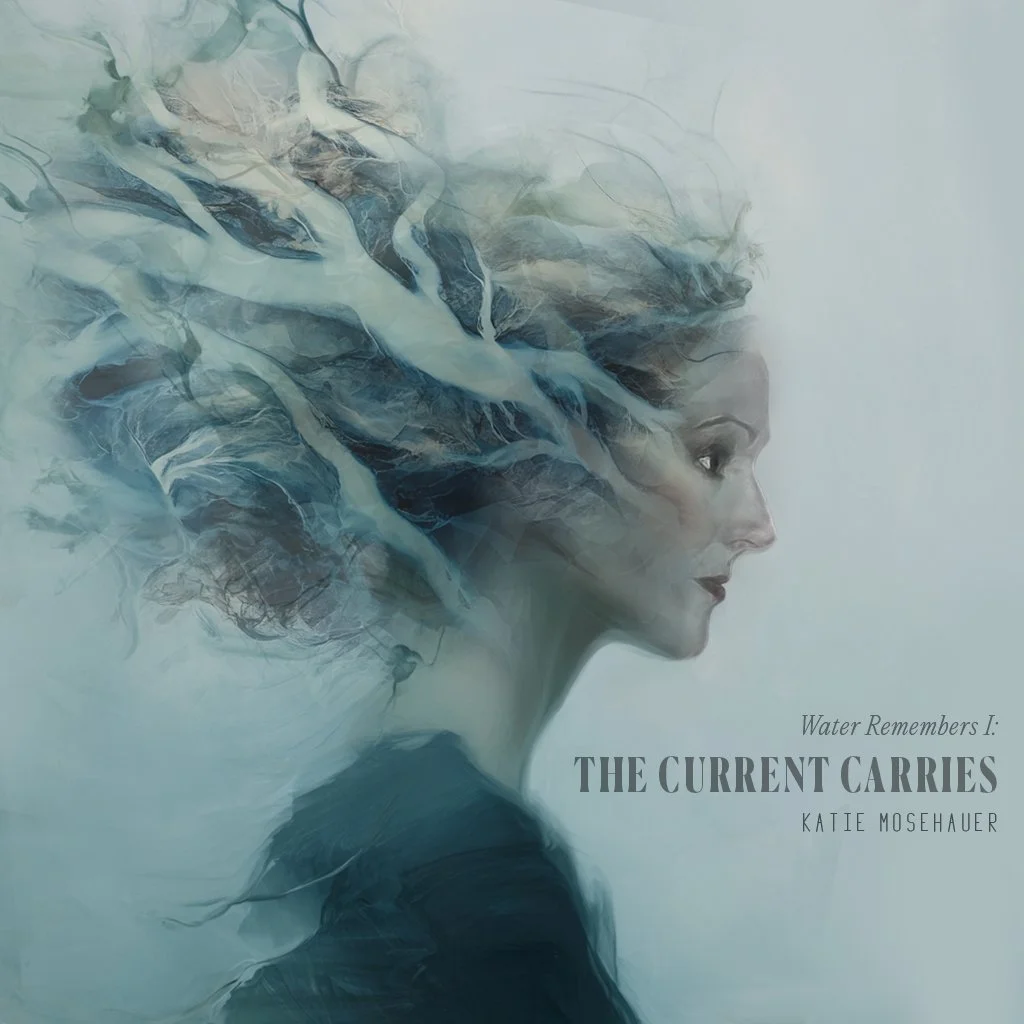
Releasing October 23, 2026, The Current Carries opens Water Remembers with Franz Liszt’s Consolation No. 3 in D-flat major and Mosehauer’s original companion work, Converging Tides (after Liszt). Liszt’s Consolations cycle emerged from a search for solace in friendship after a loss of faith; Mosehauer’s response turns that history toward contemporary doubts about inevitable progress. Rather than imagining change as a single current moving forward, the volume considers it as the convergence of countless lives, efforts, and sacrifices. Together, the works ask what it means to sustain belief and collective action when progress feels fragile, contingent, and vulnerable to reversal.
Two ways to experience The Current Carries:
A conversation between past and present
Original composition by Franz Liszt reimagined for harp and violin by Katie Mosehauer
Newly composed companion work by Katie Mosehauer built from Liszt’s musical foundation
-
Consolations, S. 172: No. 3 in D-Flat Major, Lento placido
Arranged for violin and harp by Katie Mosehauer
Violin and harp performed and recorded by Katie Mosehauer
Mixed by Katie Mosehauer and Pierre Ferguson
Mastered by Pierre FergusonConverging Tides (after Liszt)
Arranged and composed by Katie Mosehauer
Violin, viola, harp, and synthesizers performed and recorded by Katie Mosehauer
Soundscape designed by Katie Mosehauer
Mixed by Katie Mosehauer and Pierre Ferguson
Mastered by Pierre Ferguson -
Consolations, S. 172: No. 3 in D-Flat Major, Lento placido
Although rooted in the classical tradition, this recording was shaped as much by Mosehauer's experience in independent music as by her background as a violinist. Because she performs both the violin and harp parts, the work was recorded one instrument at a time rather than as a traditional ensemble performance. This approach created an opportunity to borrow production techniques more commonly associated with singer-songwriters and indie records.
Rather than placing the instruments at a distance within a simulated concert hall, each was recorded intimately and in detail. The violin was treated much like a lead vocal—centered, immediate, and expressive—while the harp was approached more like an acoustic guitar, providing warmth, texture, and harmonic support around it.
The result is a deeply personal interpretation of Liszt's music, one that preserves the piece's quiet lyricism while inviting the listener into a more intimate relationship with the sound itself.
Converging Tides (after Liszt)
While Liszt's Consolation No. 3 is built from the voice of a single instrument, Converging Tides expands that intimate world into something much larger. Drawing heavily from the layering and production techniques of independent music, the piece reimagines Liszt's material as an evolving landscape of strings, synthesizers, sound design, and texture.
The work begins with atmospheric synths and fragments of the harp theme. Individual notes emerge, disappear, and gradually accumulate until familiar melodic material begins to take shape. Throughout the piece, musical gestures from Liszt's original composition are deconstructed and rebuilt, allowing new harmonies, countermelodies, and emotional possibilities to emerge beneath the surface.
Every instrument heard in the recording was performed by Mosehauer. More than one hundred individual tracks of violin, viola, harp, synthesizers, and sound design elements were layered to create an orchestral scale from a single performer. What begins as a solitary voice gradually becomes a convergence of many—mirroring the central idea at the heart of the composition itself.
Rather than simply arranging Liszt's work for a larger ensemble, Converging Tides (after Liszt) uses its source material as a point of departure. The piece follows its own emotional trajectory, amplifying moments of tension, release, heartbreak, and renewal to tell a new story built from the foundations of the old.
Bringing sound into motion
Water Remembers concentrates the central elements of Katie Mosehauer’s practice—music, film, landscape, physical form, time, memory, and perception—into an audiovisual series in which improvised movement becomes an extension of the musical performance, allowing the body to participate in the questions the music is asking rather than simply presenting the notes on the page.
First video: Original composition by Franz Liszt reimagined for harp and violin by Katie Mosehauer
Second video: Newly composed companion work by Katie Mosehauer built from Liszt’s musical foundation
-
Directed, filmed, and edited by Katie Mosehauer.
-
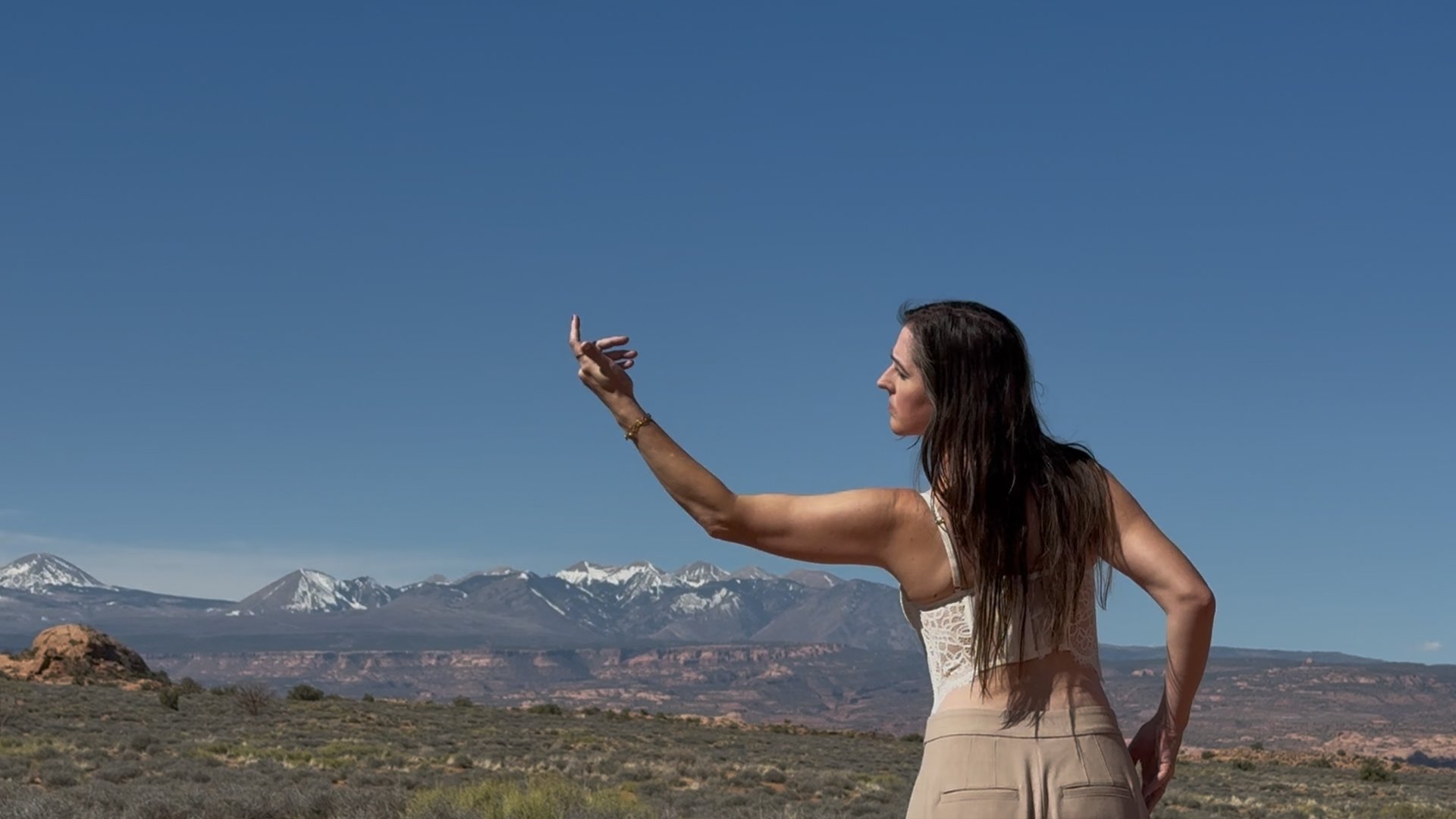
Mosehauer often finds herself seeking solace from the disappointments of human endeavor in the cathedral of nature. In this film, that impulse becomes both setting and subject.
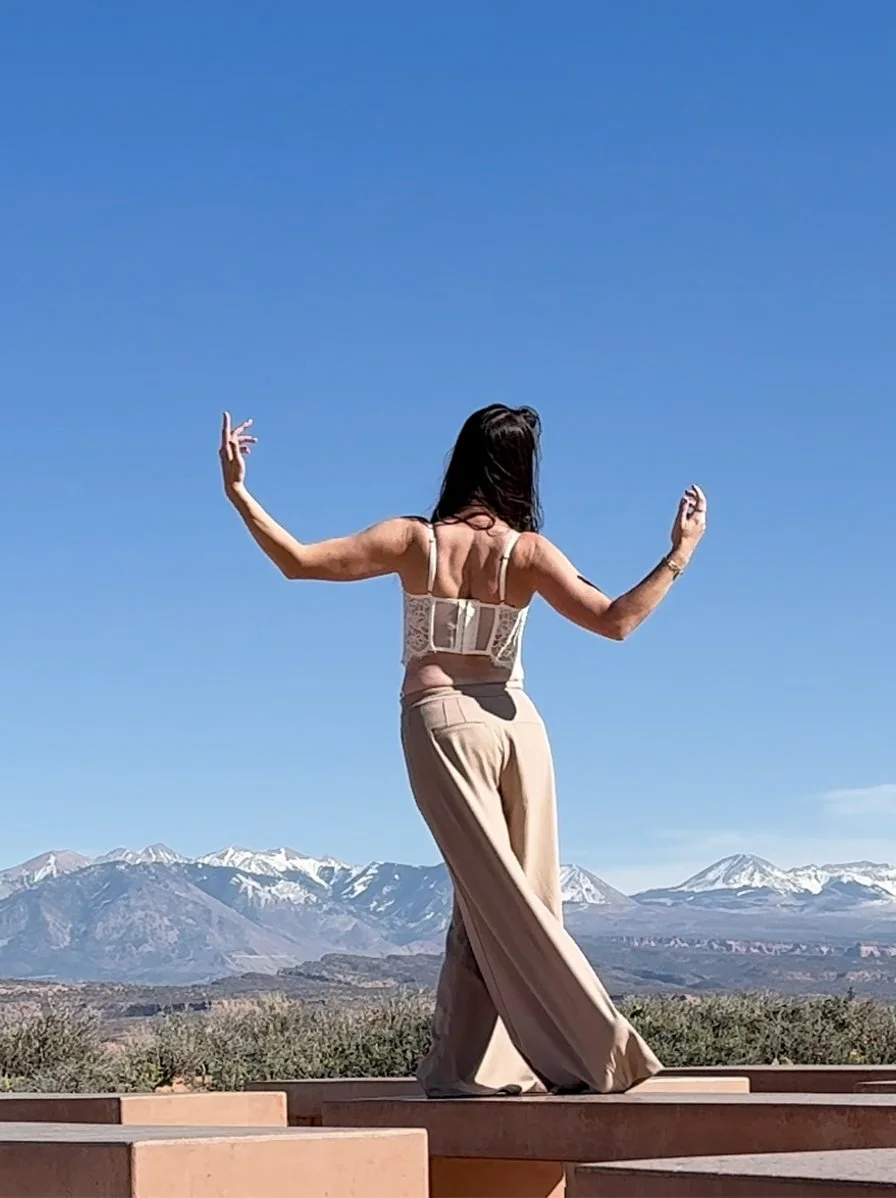
The work explores a tension between classical performance traditions and the embodied expressiveness often found in contemporary and independent music. Classical musicians are frequently taught to disappear behind the work, minimizing physical gesture in service of the music itself. Here, improvised movement becomes an extension of the musical performance, allowing the body to participate in the questions the music is asking rather than simply presenting the notes on the page.
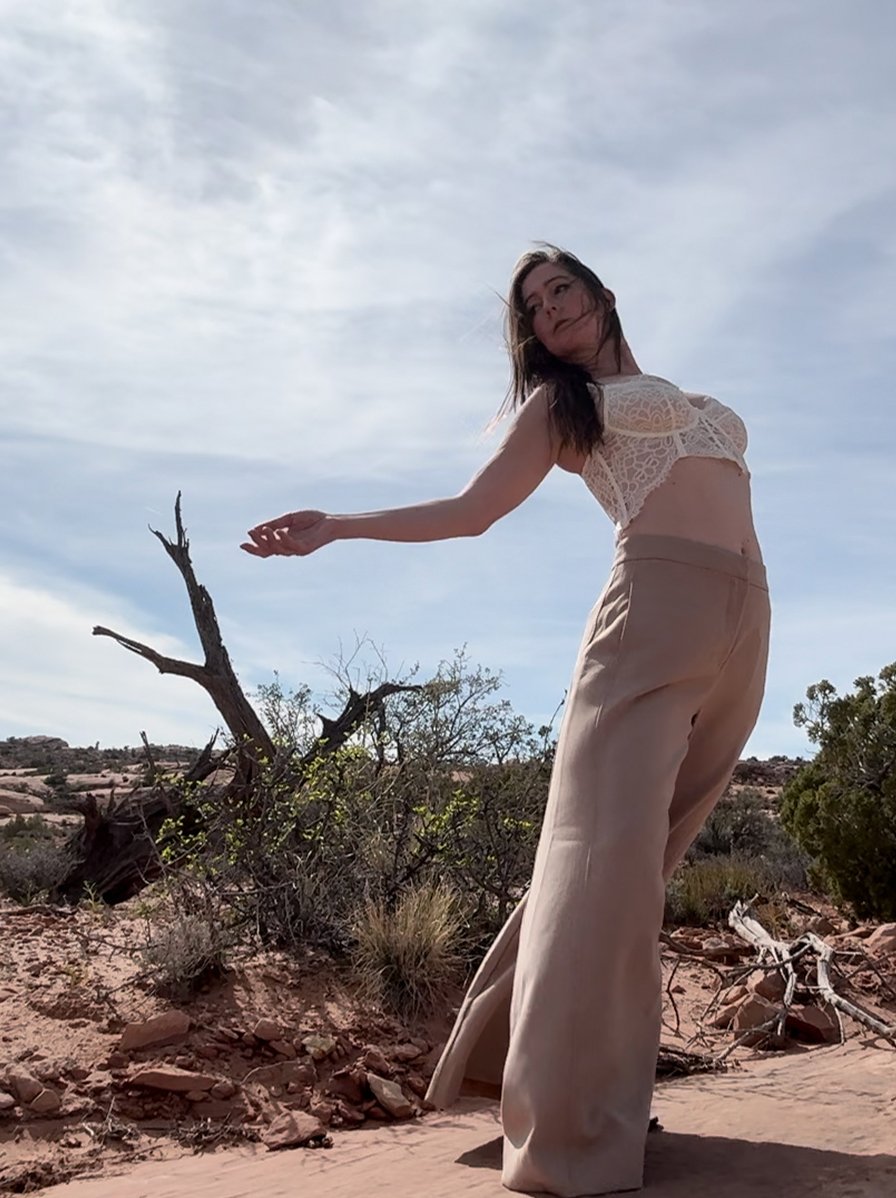
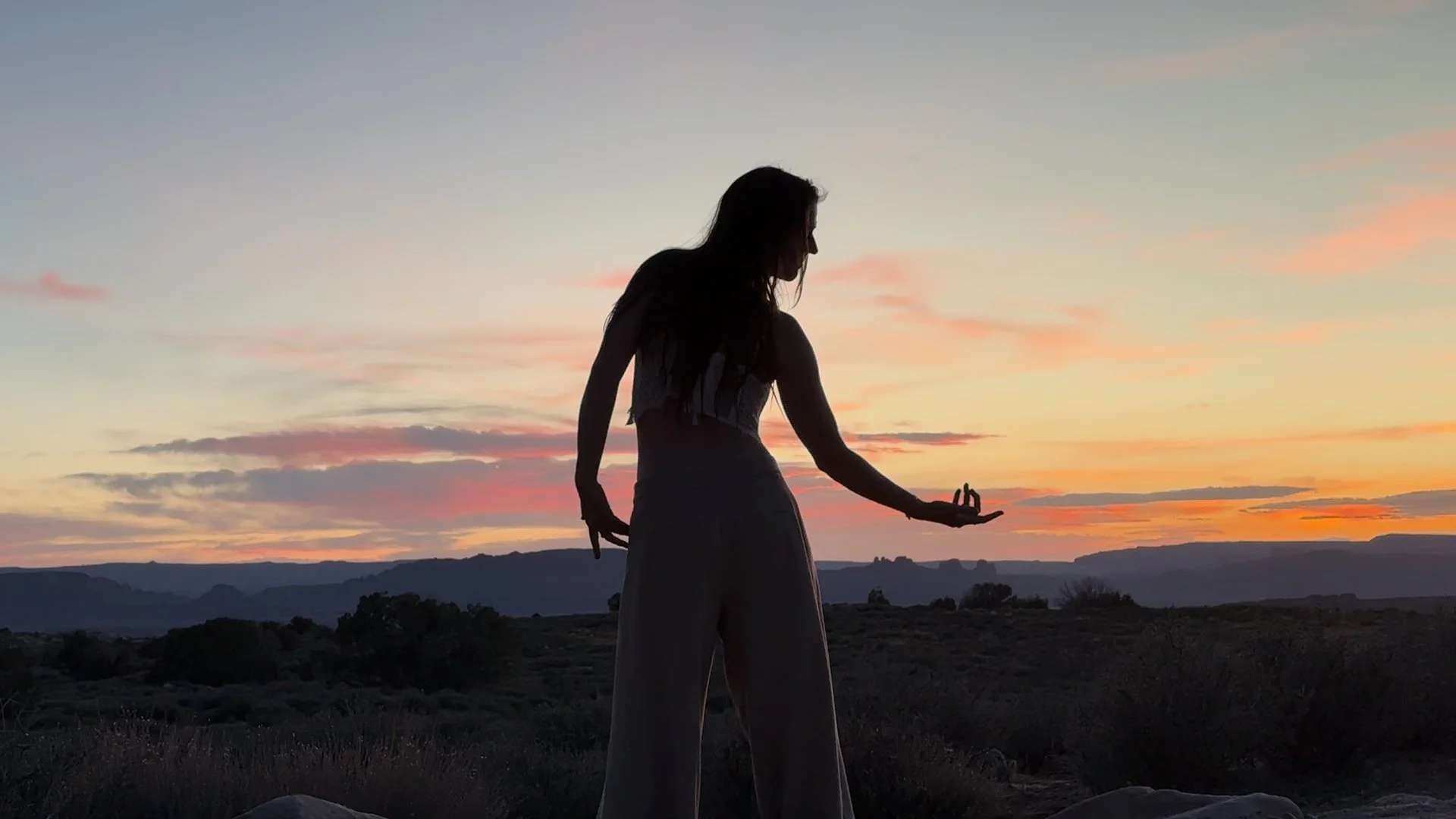
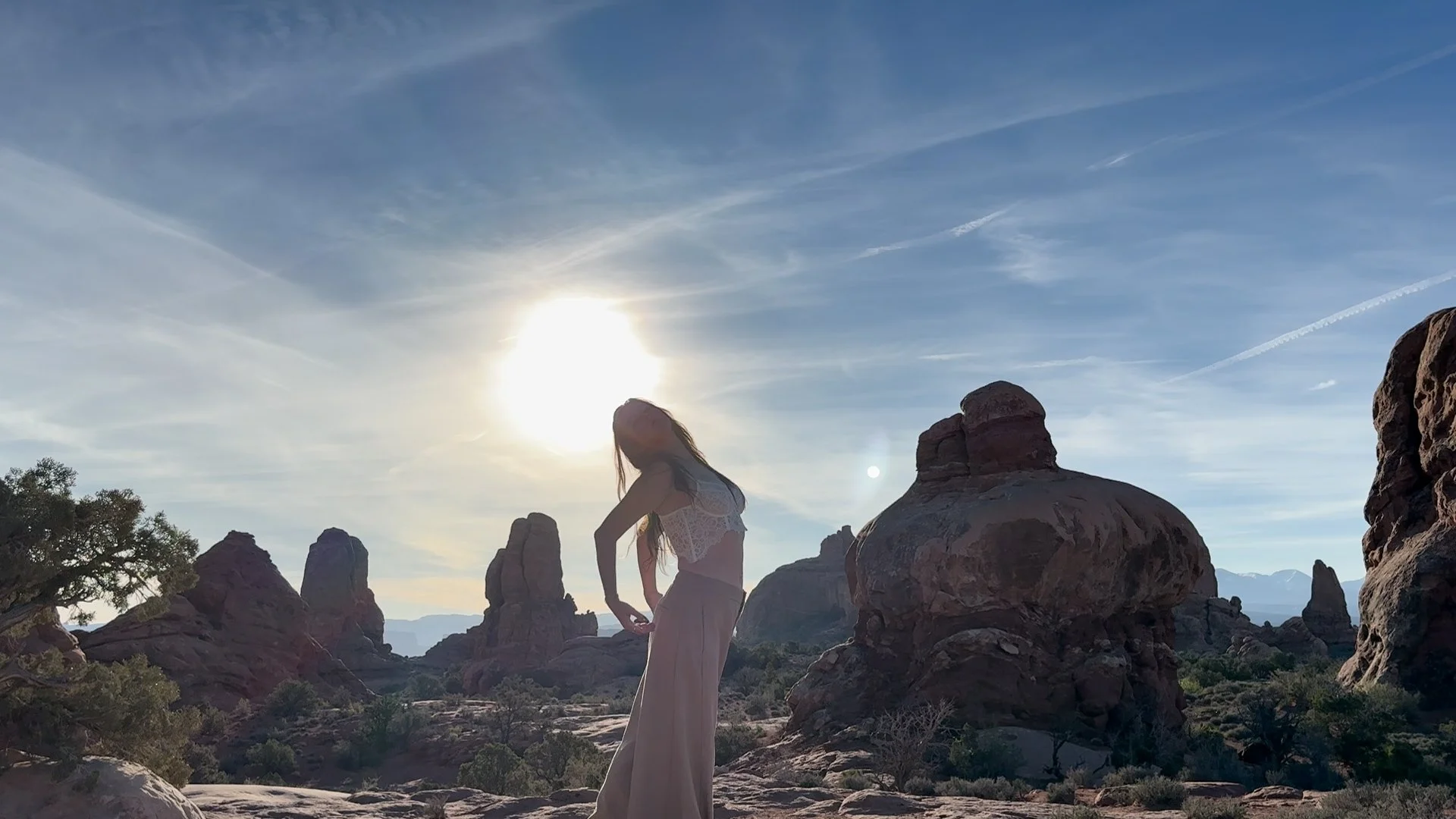
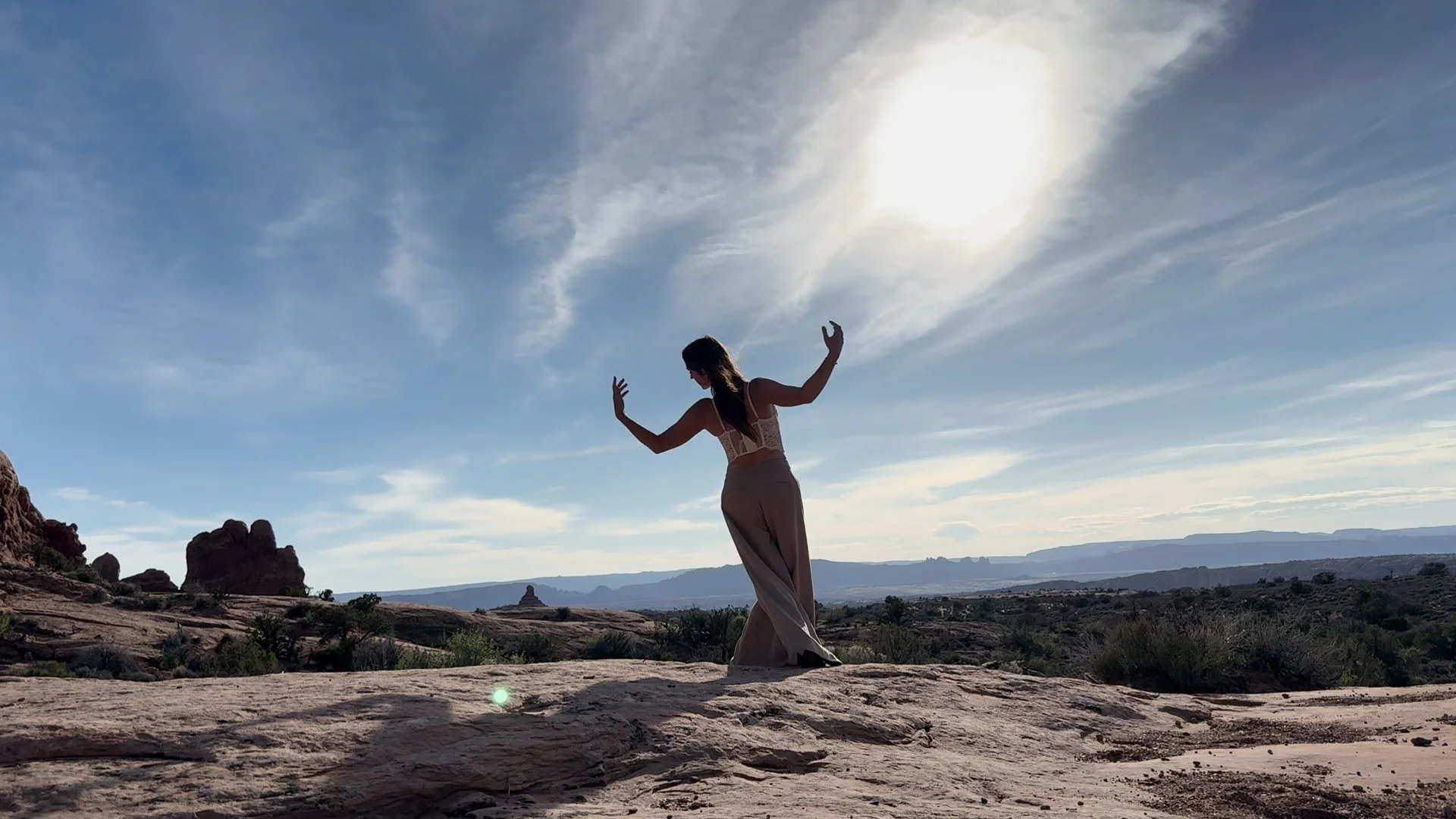
Shot among the landscapes of the American Southwest, canyon walls, desert light, and open sky become part of the performance itself. The performer moves between stillness and motion, restraint and release, creating a visual counterpart to Liszt's search for consolation. The body becomes both witness and participant—another living element within the landscape.
-
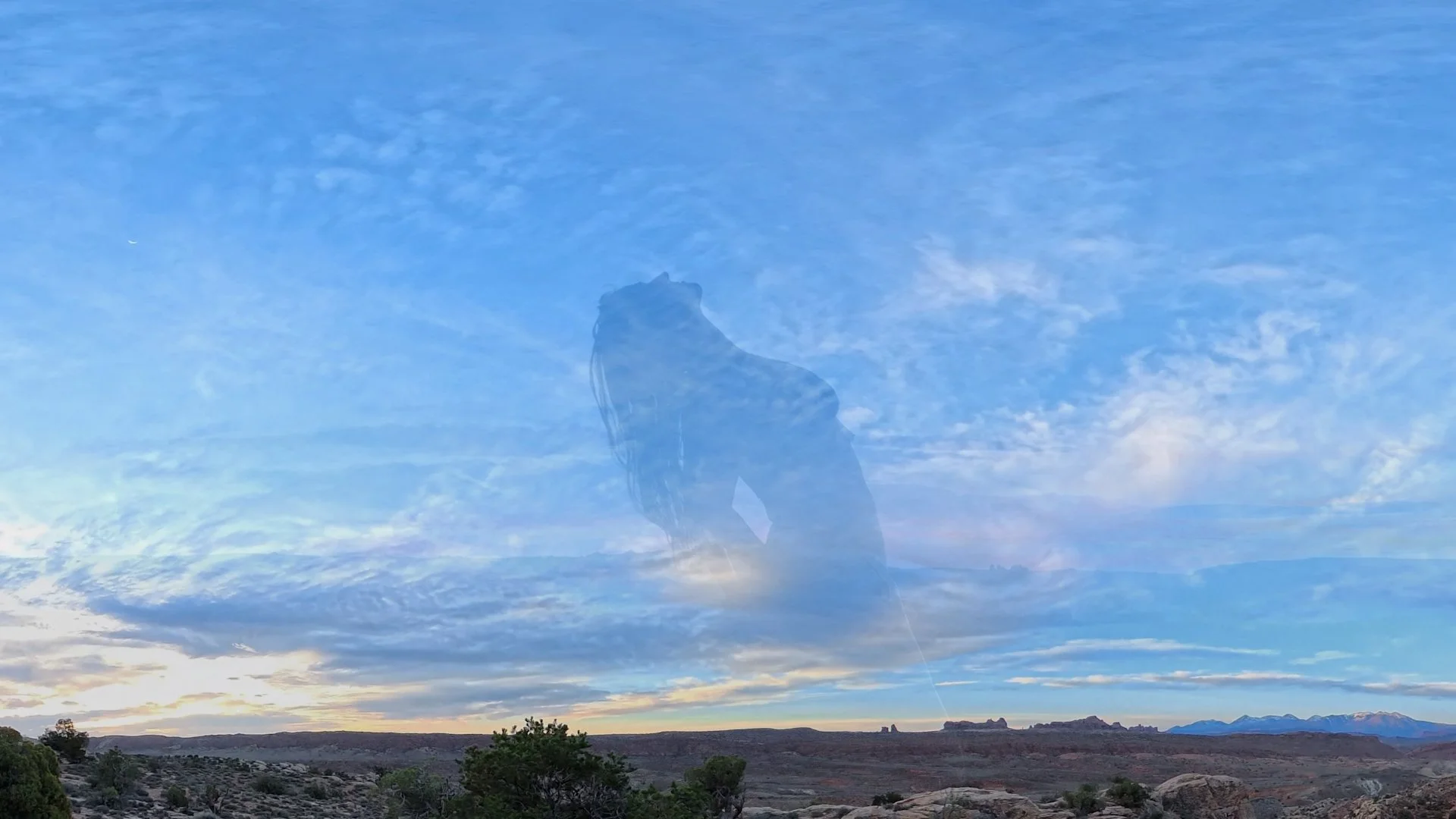
Where the Consolation No. 3 film centers the individual body, Converging Tides (after Liszt) expands outward toward questions of scale, accumulation, and collective forces. Shot among towering sandstone formations, winding rivers, and vast desert expanses, the film places a single human life within environments shaped by processes unfolding across millennia.
These landscapes become visual reminders that transformation rarely occurs through singular events. Rivers carve canyons through countless repetitions. Stone is shaped through accumulation, erosion, and pressure. What appears permanent is continually changing; what appears sudden is often the result of forces gathering over time.
This same logic guides the film's movement vocabulary. Gestures repeat, falter, and begin again, echoing the countless individual acts through which meaningful change is built. No single movement transforms the landscape. Instead, each action joins those that came before it, accumulating into something larger than any one body could accomplish alone.
The imagery reflects the central idea of the composition itself: what appears from a distance to be a single current is, upon closer examination, the convergence of many. Wind, water, stone, memory, history, and human action all leave their traces. The current carries because countless forces are already carrying one another.
Full Water Remembers Overview
Water Remembers is a four-volume audiovisual body of work by Katie Mosehauer. Each volume pairs a canonical classical composition with an original response built from its musical foundations, creating a two-part conversation between inherited material and the present. The music is accompanied by films in which landscape, movement, texture, physical form, and contextual text provide another vantage point on the ideas held in the sound.
The project approaches classical repertoire not as a fixed monument, but as a living language that can be entered, questioned, dismantled, and transformed. It uses inherited music to ask explicitly political questions about contemporary life: how people understand progress, how individual action gathers into collective force, how instability is disguised, and how violence persists beneath familiar surfaces.
Informed by Mosehauer’s years in criminal justice reform and social justice advocacy, the four volumes move from progress, participation, and collective action toward instability, disappearance, and violence. Water Remembers is a distinct project and a concentrated expression of her larger practice—one in which music, image, landscape, physical form, time, memory, and perception work together to reveal what may be missed from a single point of view.
-
The Current Carries
Releasing October 23, 20261. Consolations, S. 172: No. 3 in D-Flat Major, Lento placido
2. Converging Tides (after Liszt)
-
What Doesn’t Hold
Releasing in 20271. Orfeo ed Euridice, Act II: Dance of the Blessed Spirits (arr. Kreisler)
2. The Rill Wavers (after Gluck)
-
Slipping Under
Releasing in 20271. Violin Sonata in D Major, HWV 371: III. Larghetto
2. The Tether Slacks (after Handel)
-
What Lies Beneath
Releasing in 20271. Sonata in G Minor, Op. 1, No. 10, B.g10 “Didone abbandonata”: II. Presto non troppo
2. Midnight Fathoms (after Tartini)
Titles, tracks, and timing
About Katie Mosehauer
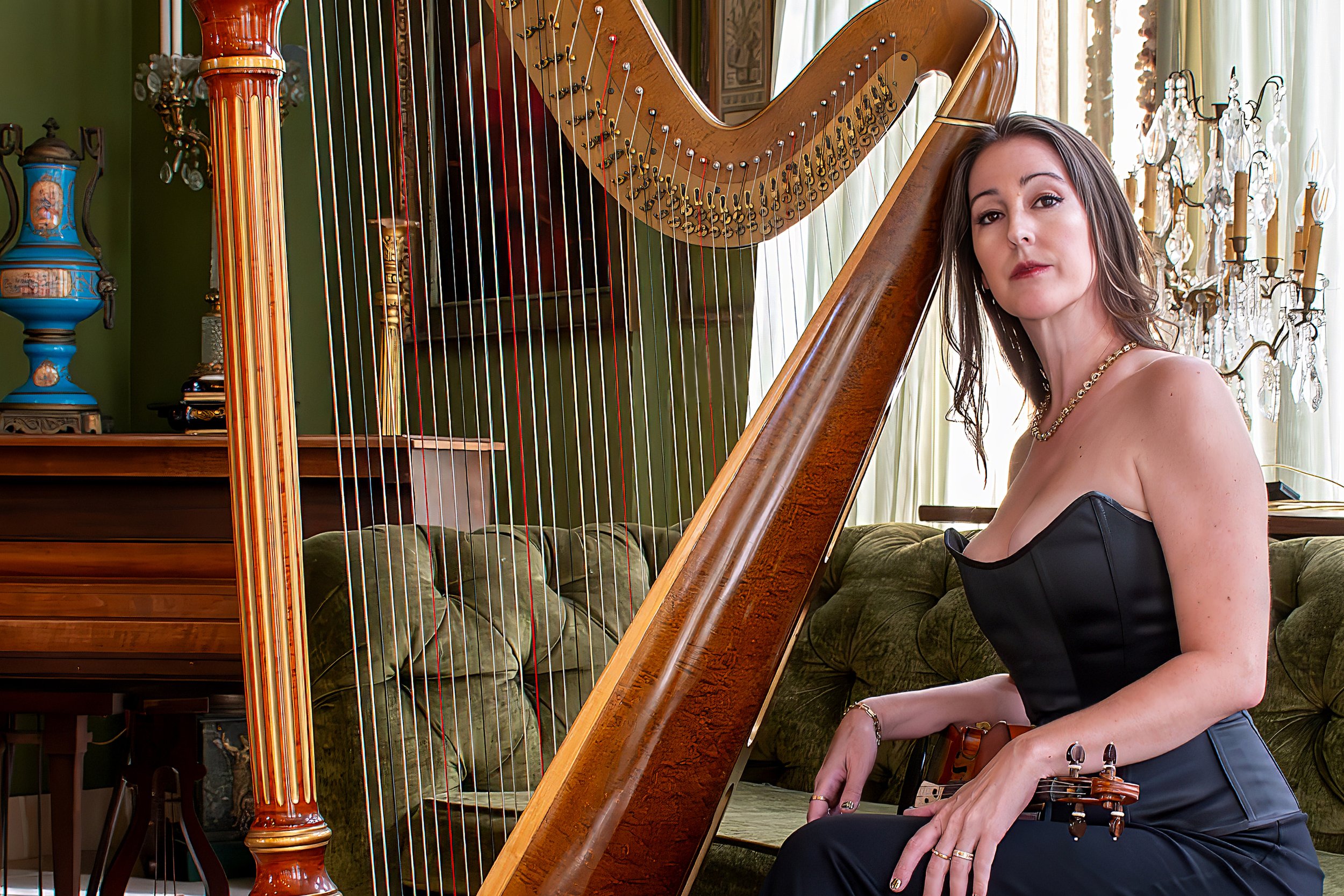
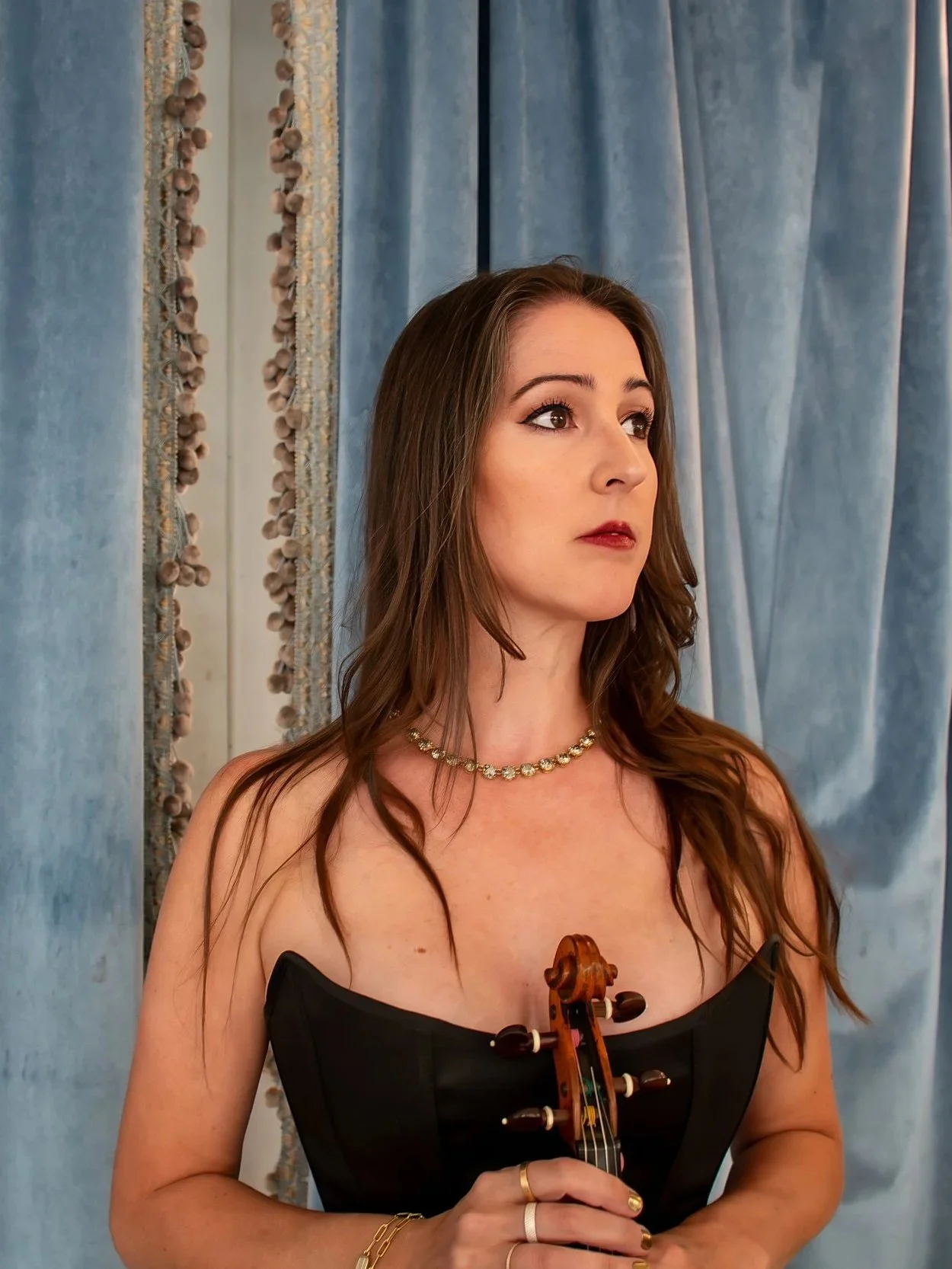
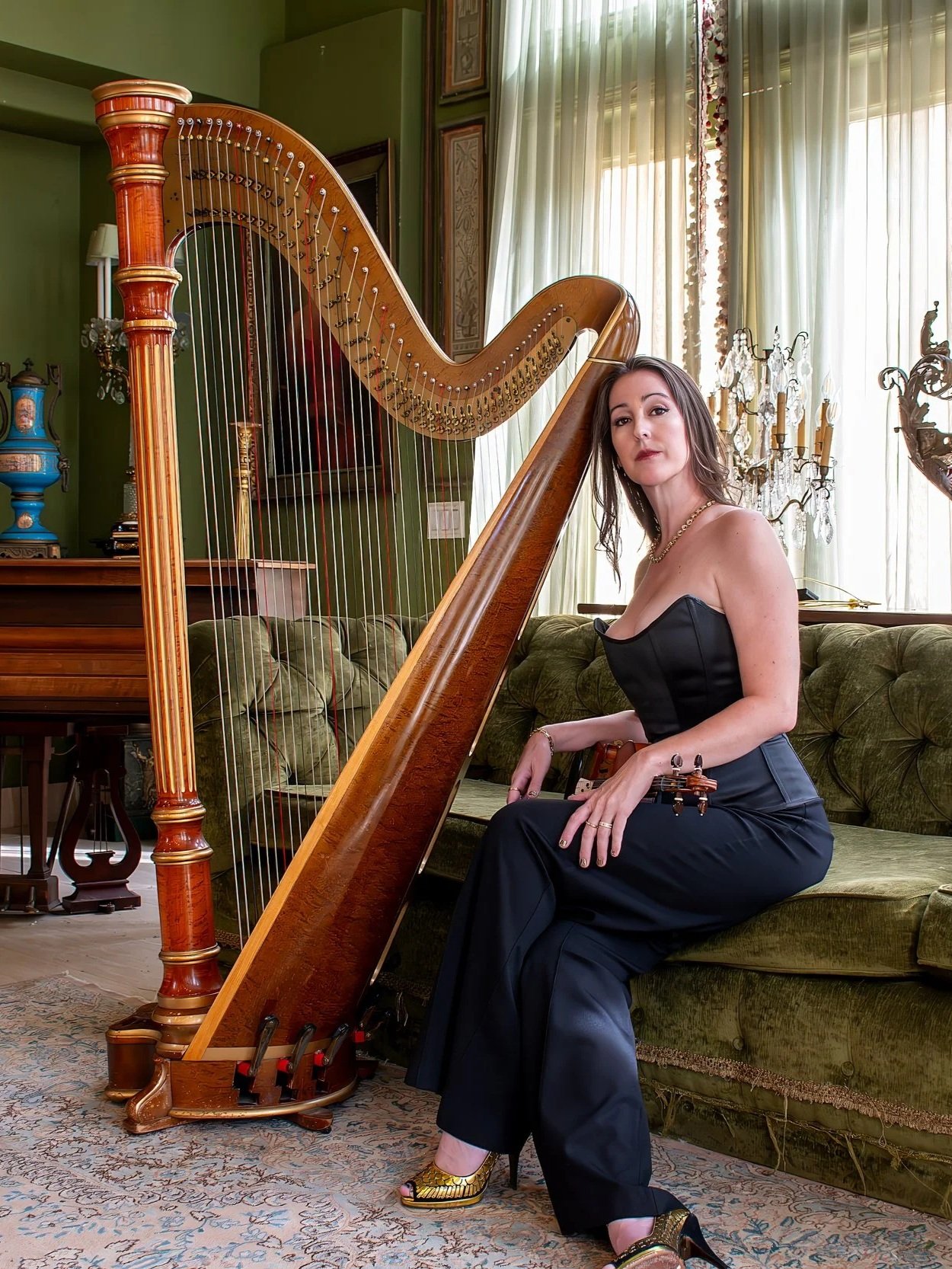
Katie Mosehauer is a violinist and interdisciplinary artist who works through composition, performance, production, film, landscape, and physical form. A classically trained multi-instrumentalist, she works with violin, viola, cello, harp, piano, synthesizers, and sound design, with music as the center of her creative gravity. She creates original compositions, reimagined classical works, recordings, performances, and music films that bring sound, image, landscape, and physical form into conversation. Across mediums, she explores moments from more than one vantage point, inviting audiences to linger with how time shapes memory, perception, and reality.
Mosehauer’s artistic path brings together classical performance, independent music-making, and more than a decade of work in criminal justice reform and social justice advocacy. That experience deepened her interest in inherited systems, collective memory, and the stories through which people understand the present. Her practice does not treat those parts of her life as separate; it allows their different vocabularies to inform the questions each work asks.
As a performer, Mosehauer has appeared with the Charlottesville Symphony, Puget Sound Symphony Orchestra, and Seattle Rock Orchestra. She also records and tours with independent and cross-genre projects, including her band, Glass Heart String Choir. Her original music has received recognition from the International Songwriting Competition, International Acoustic Music Awards, and One World Music Awards, and she is a voting member of the Recording Academy. Beyond music, she directs and produces films that use performance, movement, landscape, texture, and cinematic imagery to extend the meaning of the work.
Her current body of work, Water Remembers, pairs canonical classical repertoire with original compositions built from the musical bones of those works and with accompanying films. Across four connected volumes, the explicitly political project examines progress, participation, instability, violence, remembrance, and the ways inherited systems continue to shape the present. Based in California’s Coachella Valley, Mosehauer creates work that asks audiences to listen again, look from another vantage point, and remain with complexity long enough for new understanding to emerge.
Studio Photos

Video Stills