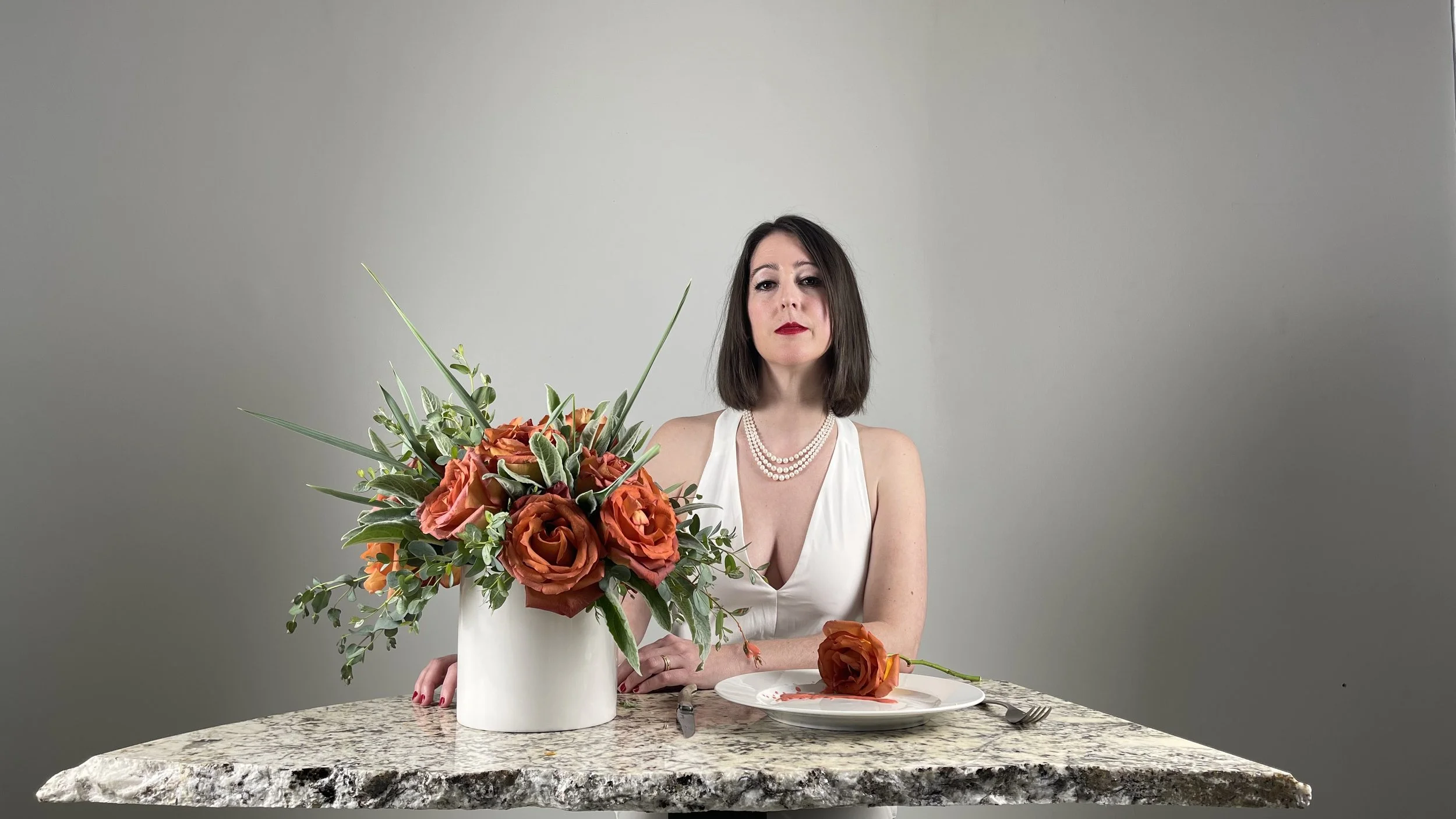
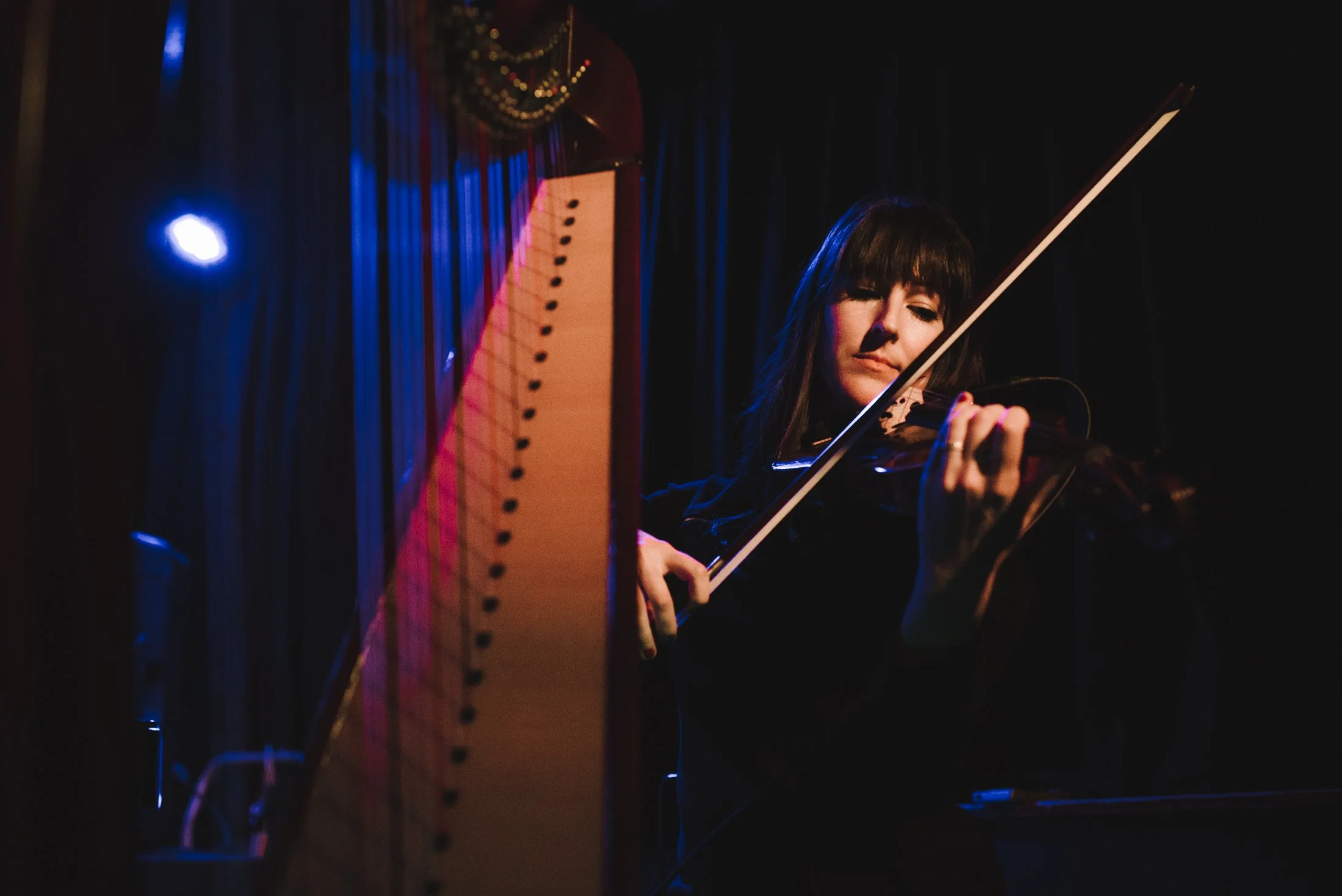
Katie Mosehauer is a violinist and interdisciplinary artist who works through composition, performance, production, film, landscape, and physical form. A classically trained multi-instrumentalist, she works with violin, viola, cello, harp, piano, synthesizers, and sound design, with music as the center of her creative gravity. She creates original compositions, reimagined classical works, recordings, performances, and music films that bring sound, image, landscape, and physical form into conversation. Across mediums, she explores moments from more than one vantage point, inviting audiences to linger with how time shapes memory, perception, and reality.
Mosehauer’s artistic path brings together classical performance, independent music-making, and more than a decade of work in criminal justice reform and social justice advocacy. That experience deepened her interest in inherited systems, collective memory, and the stories through which people understand the present. Her practice does not treat those parts of her life as separate; it allows their different vocabularies to inform the questions each work asks.
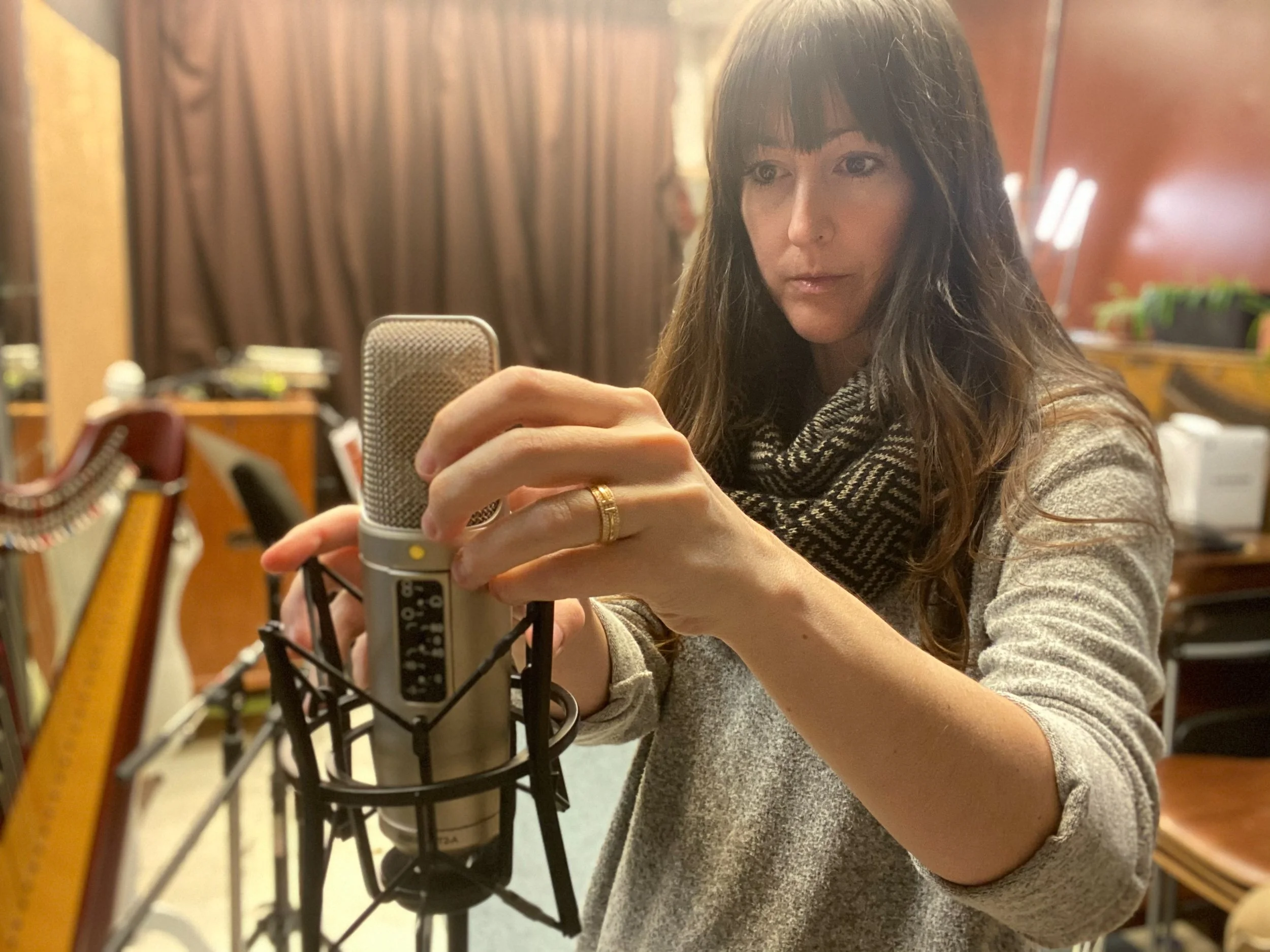
As a performer, Mosehauer has appeared with the Charlottesville Symphony, Puget Sound Symphony Orchestra, and Seattle Rock Orchestra. She also records and tours with independent and cross-genre projects, including her band, Glass Heart String Choir. Her original music has received recognition from the International Songwriting Competition, International Acoustic Music Awards, and One World Music Awards, and she is a voting member of the Recording Academy. Beyond music, she directs and produces films that use performance, movement, landscape, texture, and cinematic imagery to extend the meaning of the work.
Her current body of work, Water Remembers, pairs canonical classical repertoire with original compositions built from the musical bones of those works and with accompanying films. Across four connected volumes, the explicitly political project examines progress, participation, instability, violence, remembrance, and the ways inherited systems continue to shape the present. Based in California’s Coachella Valley, Mosehauer creates work that asks audiences to listen again, look from another vantage point, and remain with complexity long enough for new understanding to emerge.